Showing posts with label rating: good. Show all posts

Tuesday, October 21, 2008

Freakonomics

Steven Levitt and Stephen J. Dubner
2005

rating: good

plot: A non fiction book that takes the concepts of economics out of the classroom and applies them to real-world scenarios.


I don't usually go for non fiction books (I consider them elitist). But everyone was talking about this one (albeit two years ago) and I'm always interested in anything that has a Chicago perspective (Levitt is a economist at the University of Chicago).

The book is basically a collection of essays; economics articles by Levitt reworked for the layman by Dubner. They address questions like, Why do teachers cheat on standardized tests? and Do sumo wrestlers ever fix their matches? and Why do drug dealers live with their moms? They also manage to break down the complex issues of parenting into cost/benefit analyses. The essays are entertaining and they actually get you to think twice about statistics.

I took an economics class in college. One time a fellow student asked to borrow my notes for a class she missed and I was forced to reveal that my notebook was mainly doodles that terminated in long lines off the page (which tends to happen when you fall asleep while holding your pencil). But trust me, no knowledge of economics is required for this book whatsoever. However, I will say that the books leans towards the Democratic reader. Some readers will not be entertained to read about inner-city drug dealers portrayed sympathetically or to look at abortion issues from a purely social perspective. I, for one, was highly amused to read about these things, I'm just saying not everyone would be.

Anyway, I guess you could also just go to their Freakonomics blog and get the same idea.

Monday, October 20, 2008

Lavinia

Ursula K. Le Guin
2008

rating: good

plot: A re-imagining of portions of the Aeneid by Aeneis' wife, Lavinia.


I am not a fan of the Roman hero Aeneis.* In my view, he is the second biggest screwer-over of a good woman in the whole of Greek mythology. The biggest being that jerk-wad Jason. But at least Jason's Medea had an impressive revenge. Aeneis' Queen Dido went out like a wimp - basically throwing herself on a funeral pyre when, after a year of seeing to Aeneis' every need, he tells her, "nuts to you, we weren't officially married anyway, see you later sucker," and sails away.

But of course I knew Le Gruin, most famous for her Earthsea series, would write a compelling story. Indeed, she managed to make Aeneis a sympathetic character. But the story wasn't about him; it was about Lavinia, the princess who didn't even have a single line of dialog in the epic poem.

When I picked up the book, I thought it would be like Marion Zimmer Bradley's, The Firebrand, which was a straight retelling of the Trojan war from Cassandra's perspective. Instead Le Gruin had the narrator, Lavinia herself, step back and acknowledge that she was telling a story that was based on the poem. Lavinia has a wider knowledge of her fate and the fate of her descendants that your typical first-person narrator. I think Le Gruin was going for a reflection of the original poem. Consider that the poet Virgil wrote the Aeneis in a time when people didn't believe in the literal personification of Gods anymore. He wrote it as an imagined history of the Roman empire (maybe a little bit like how people these days write about King Arthur and Merlin as the founders of modern Brittan).

I would recommend this book to anyone who has an interest in epic stories about love and war (although the book is brief compared to your typical epic). The book takes Lavinia from girlhood, through the war over her hand in marriage, through the rest of her life as Queen. No knowledge of the Aeneid is necessary to read this. Although after I finished, I was driven to pick up, for the thousandth time, Edith Hamilton's Mythology. Hamilton's book is a concise summary of all the important myths and poems that I recommend for anyone with even a passing interest in Greek/Roman mythology.

*note: Although Aeneis himself was Trojan, the Aeneid was written by Virgil in the time of Caesar Augustus as a Roman rallying myth.

Monday, October 6, 2008

Wideacre

Philippa Gregory
1987

rating: good

plot: In this bodice-ripper, a strong-willed 18th century woman takes drastic measures to ensure that her father's estate, which would typically by law pass to the male heir, be bequeathed instead to herself.


Confession: I like to read romance novels a few times a year. Second confession: I chose this book solely because I heard it contained particularly steamy love scenes.

There is obviously a huge market for romance novels and I think it's a misconception that they are all drivel. There is, I think, a wide range of romance novels. There are the Harlequin kind which are mainly plot-less, like what you see on late-night TV soft-core. There are the Danielle Steel/Nora Roberts kind that are like cookie-cutter Lifetime movies with detailed love scenes. Gregory's book falls into the category of incognito romances. These are the kind of books that would completely work if the author removed the sex scenes; you might not even realize it is an incognito romance when you start reading it.

Gregory is famous now for writing The Other Boleyn Girl, which was recently a movie. (I read that one, too. Also an incognito romance.) Wideacre takes place on an 18th centry estate. Beatrice is a young woman supremely frustrated that she cannot by law inherit the estate, although she is the best farmer and business-person in her family. Starting when she is a teenager, she develops truly shocking plans to install herself in the power seat of the estate.

Beatrice is a fabulous anti-herioine in the tradition of Becky Sharp of Vanity Fair and Marquise de Merteuil of Les Liaisons Dangereuses (andthe Marquise's modern incarnation, Kathryn Merteuil of Cruel Intentions). And the plot is very VC Andrews, if you catch my drift. This is definitely a fun read if you feel like living vicariously through a deliciously devious, plotting female.

Sunday, October 5, 2008

Water for Elephants

Sara Gruen
2006

rating: good

plot: An elderly man recounts the summer when he ran away with the circus.


Jacob is an elderly man in a nursing home. He has a family who loves and visits him, but this still leaves him countless hours by himself to reflect on his life and his failing body. He narrates the story of the summer during the depression when he was about 20 years old and ran away with the circus. Jacob spends his days in hard labor, while admiring from afar the beautiful sequin-costumed acrobat Marlena.

This is a nice solid book for all adult readers. A book-club read if I ever found one. I read it while on vacation, so can personally attest that it's also a good pool-side read. The most interesting aspect was the first-person account of Jacob's struggles with aging. In a way, though, it really brought home the idea of a happy ending. Yes, we all know the happy ending when the hero "rides off into the sunset." But what about the rest of his life? It was comforting to know that whatever happened at the end of the summer in the circus, Jacob ended up with a long and happy life (that's not a spoiler - he indicates as much in his introductory paragraphs).

Wednesday, October 1, 2008

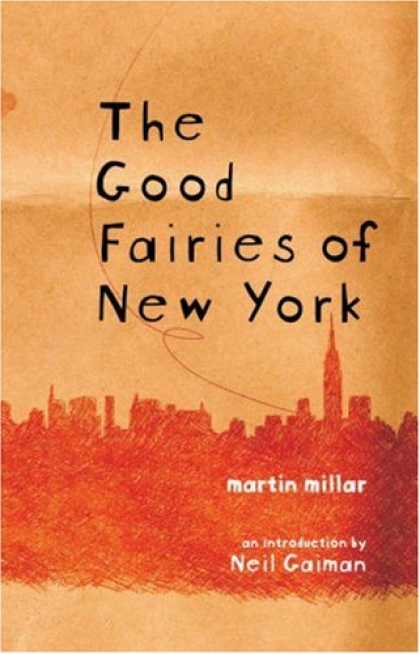
Good Fairies of New York

Martin Millar
1992

rating: good

plot: A pair of party-animal fairies escape their Scottish home and flee to New York, where they cause mischief between a lonely girl and the anti-social boy who loves her from afar.


As someone who enjoys a good fairy tale, this book was a refreshingly unique take. Millar plops these fairies down into the spot where there is probably the least amount of magic in the world - the respective New York apartments of Kerry, young artist chronically plagued by Chrone's disease, and Dinnie, a dim-witted terrible street musician. The fairies, Heather and Morag, spend much of the time drunk and fighting melodramatically.

This book is more about reading of the ridiculous fairy antics than about teaching or moral or even changing the lives of Kerry and Dinnie. It's a fun read whether or not you have read other fairy lore stories.

Tuesday, September 30, 2008

No One Belongs Here More Than You

short stories
Miranda July
2007

rating: good

plot: These short stories are brief glimpses into the extreme emotions of socially awkward people.


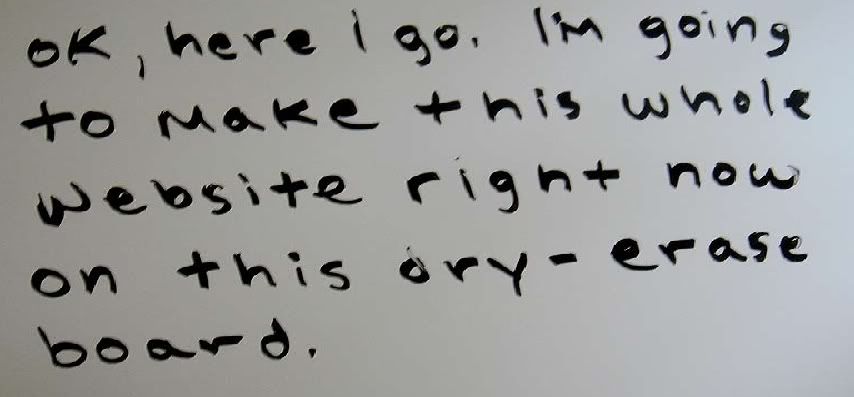
Back in 2007 Miranda July made waves with her impressively low-tech self-promotion for this book. Go to her website to be amused (click on the tiny pink arrow on the bottom right corner).

The stories aren’t your typical beginning-middle-end tales. Instead, July presents a sort of snapshot of the thoughts of a seemingly average person. But doesn’t getting even a fleeting glimpse into someone’s mind always reveal things are not what they appear to be?

I usually stay mum on all plot points of a novel, but I think I’ll tell you about one of the stories just to give you an example. The one story that stuck with me was about a woman who was born with a disfiguring birthmark on her face, then later in life had it completely surgically eradicated. Although she married and had a happy life, she was consumed by thoughts that if her husband had met her with the birthmark, he wouldn’t have loved her. This despite the fact that her husband seemed like a caring person who already told her it wouldn’t matter to him what she looked like. She never realized her preoccupation wasn’t about him at all; if she still had the birthmark, she wouldn’t have been ready to fall in love. Aren’t these the kind of frustrating what-if questions we all ask ourselves?

Sunday, September 28, 2008

Throw Like A Girl

Jean Thompson
short stories
2007

rating: good

overview: Stories about the every-day lives of women.


I love reading short stories. The necessary jam-packing of action into a short story excites my imagination and reading just one can keep me thoughtful and satisfied for the rest of the day. (But I usually devour two or three at a time because I can’t help myself.)

Thompson’s stories are about women from all walks of life who typically by the end of the narrative will have some sort of realization. It’s almost a collection of thoughts that you might find in the head of that given women.

I’m not sure exactly how to review a book of short stories. These were good stories, but they didn't have me thinking about them hours later. Let's say it is a good book to carry into a waiting room with you.

Ghost World

Daniel Clowes
Serialized 1993-1997; compilation 1998

rating: good

plot: Two angsty teenagers sound off about their friends, their town and their lives in general.

Scarlett Johansson and Thora Birch in the 2001 movie.

I’m not one for graphic novels. Although I love the stories, I’ve never been able to get into the erratic picture/text lay out of the books. The Uncanny X-Men doesn’t work for me, although those are my favorite superheroes. Neither does Sandman, although Neil Gaiman is my favorite author. But my mom gave me Ghost World and I wanted to try it because it’s about two angsty teenage girls and the layout is clear and boxy.

The comic is a low-key look into the lives Enid and Becky, who overanalyze every situation and make their best efforts to seem as cutting edge as possible. Take, for instance, the couple they see every day in the local diner, who the girls are convinced are Satan worshipers simply because they look so mundane. Or when Enid dyes her hair green and insists it’s not because of the resurgence of the punk craze; it’s because she just felt like doing it. Needless to say, I love Enid and Becky because they are just like me.

I would recommend this to anyone who was interested in a quick read about two people who can’t get out of their own heads. (Although the protagonists are two girls, the plots are not distinctly feminine.)

Thursday, September 25, 2008

Ozma of Oz

L. Frank Baum
1907

rating: good

plot: Dorothy accidentally returns to Oz only to find that she and her newly accumulated odd-ball friends must save the new child-ruler, Ozma, from the underground lair of the Nome King.


It really doesn't help my case for knowing how to read when the first book on my list is a children's book. But this was the first book I read this year and I am far too meticulous to post the books out of order.

Ozma of Oz is the third book in Baum's Oz series (the first being, of course, The Wonderful Wizard of Oz). There's a whopping 14 books in the series. I read all of them when I was a kid. If you are a big fan of the Julie Garland movie, I recommend you approach the Oz books with caution, as they are not written in Technicolor. If you are a big fan of the Broadway musical Wicked, I recommend you do not read the Oz books at all because you are clearly the type of person who is only satisfied when literature is butchered to the point where they bring the witch back from the dead in the end. For pete's sake. (Oh yeah...spoiler alert.) However, if you enjoyed the movie Return to Oz, you should read the whole series because that movie is a dead-on interpretation. (The movie's plot is based on two books: Ozma of Oz and the second book in the series, The Land of Oz.)

The Oz books are frankly written non-stop adventures. They are page-turners in the same way we all know the Harry Potter books to be page turners. But they in no other way resemble Harry Potter books. If I were to make any comparisons, I would say they are like Discworld meets Dick & Jane.

What you have to remember is that these books were written between 1900 and 1910, back when there really weren’t many novels exclusively for children. The books allow fascinating insight into the behaviors expected from children in that time. Again remembering the publication year, the female characters in the series are surprisingly adventurous and independent. Baum was a great supporter of Women’s Suffrage. While his approach may seem quaint to us now, he exhibits in these books a clear belief of female equality.

If I’m lumping the Oz books together instead of talking about Ozma of Oz it’s because the stories start to run together in my mind. The book is really about Dorothy, not Ozma. This is Dorothy’s first return to oz after she was carried about back to Kansas by the silver slippers. (The second book, The Land of Oz, didn’t feature Dorothy at all.) She befriends a new assortment of odd companions and goes on a new assortment of zany adventures.

I recommend an Oz book if you enjoy fantasy adventure and you’re looking for a quick, fun read. But I recommend reading them in order as the stories build on each other.